Embracing Cultural Safety


Cultural safety is defined by the patient’s experience. It extends beyond cultural awareness and sensitivity by recognizing and respecting the unique histories, identities, cultures, and current lived realities of Indigenous Peoples. When we practice healthcare in a way that can create cultural safety, patients experience healthcare environments where they feel free of anti-Indigenous racism and discrimination, and feel respected, safe and heard.
We recognize that colonization and policies such as the Indian Act, the Residential School System, and Indian Hospitals have created lasting trauma and inequities for Indigenous Peoples. These impacts continue today within healthcare, contributing to ongoing health disparities and experiences of unsafe or discriminatory care.
Reconciliation is a shared journey. We encourage you to contribute your ideas, insights, resources, and learnings as we work together to foster culturally safe, respectful and inclusive health care experiences.
*Please note: This page is moderated, and any inappropriate or disrespectful content will be edited and/or removed.


Cultural safety is defined by the patient’s experience. It extends beyond cultural awareness and sensitivity by recognizing and respecting the unique histories, identities, cultures, and current lived realities of Indigenous Peoples. When we practice healthcare in a way that can create cultural safety, patients experience healthcare environments where they feel free of anti-Indigenous racism and discrimination, and feel respected, safe and heard.
We recognize that colonization and policies such as the Indian Act, the Residential School System, and Indian Hospitals have created lasting trauma and inequities for Indigenous Peoples. These impacts continue today within healthcare, contributing to ongoing health disparities and experiences of unsafe or discriminatory care.
Reconciliation is a shared journey. We encourage you to contribute your ideas, insights, resources, and learnings as we work together to foster culturally safe, respectful and inclusive health care experiences.
*Please note: This page is moderated, and any inappropriate or disrespectful content will be edited and/or removed.
-
Inspiring Stories
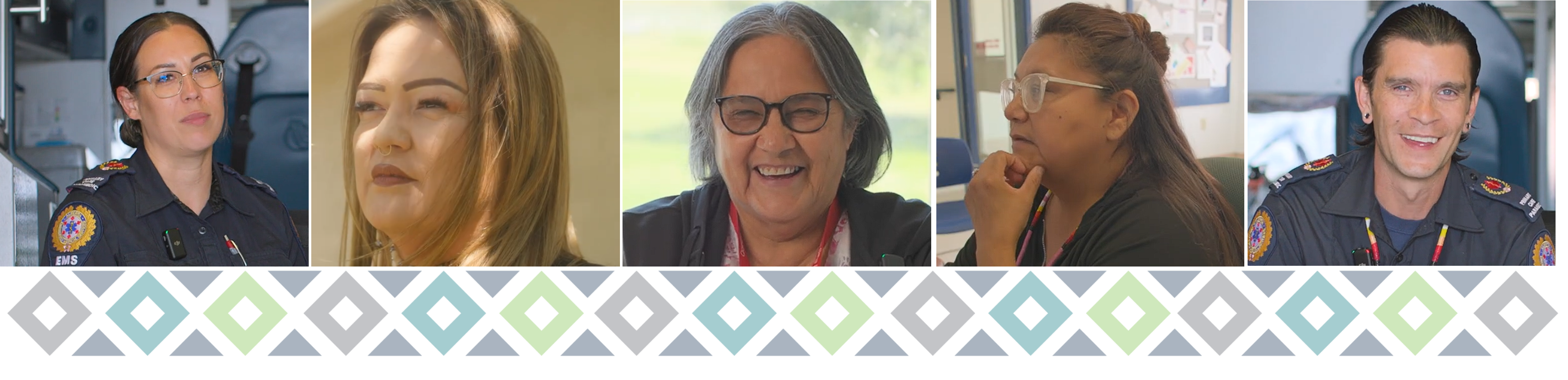
Meet some of the incredible people who work to provide culturally safe care across Alberta in our video gallery.
Meet some of the incredible people who work to provide culturally safe care across Alberta in our video gallery. -
Come explore healthcare careers!

Indigenous students entering Grades 9–12 are invited to attend the Indigenous Healthcare Career Exploration Camps in Calgary and Edmonton this summer.
Get a behind-the-scenes look at exciting healthcare careers, participate in interactive activities, connect with professionals, and learn about pathways into medicine, nursing, allied health, administration, and more.
Don't miss out - register today: https://www.albertahealthservices.ca/careers/Page13120.aspx
Indigenous students entering Grades 9–12 are invited to attend the Indigenous Healthcare Career Exploration Camps in Calgary and Edmonton this summer.
Get a behind-the-scenes look at exciting healthcare careers, participate in interactive activities, connect with professionals, and learn about pathways into medicine, nursing, allied health, administration, and more.
Don't miss out - register today: https://www.albertahealthservices.ca/careers/Page13120.aspx -
Strengthening cultural safety through meaningful partnerships
Meaningful partnerships with Indigenous communities help strengthen cultural safety in healthcare.
Kash Shade, Saakooyinaa Chief Executive Officer of the Blood Tribe Department of Health, reflects on collaboration, co-design and the importance of Indigenous voices being heard and acted on in healthcare planning and service delivery.
The video was filmed during National Indigenous Peoples Month Opening Ceremonies on Kainai Nation, hosted by the Blood Tribe Department of Health. This year’s theme, Embracing Cultural Safety, invites reflection on how healthcare teams and partners can help create care environments, relationships and systems where Indigenous patients and families feel safe, respected, heard and freeContinue readingMeaningful partnerships with Indigenous communities help strengthen cultural safety in healthcare.
Kash Shade, Saakooyinaa Chief Executive Officer of the Blood Tribe Department of Health, reflects on collaboration, co-design and the importance of Indigenous voices being heard and acted on in healthcare planning and service delivery.
The video was filmed during National Indigenous Peoples Month Opening Ceremonies on Kainai Nation, hosted by the Blood Tribe Department of Health. This year’s theme, Embracing Cultural Safety, invites reflection on how healthcare teams and partners can help create care environments, relationships and systems where Indigenous patients and families feel safe, respected, heard and free from racism and discrimination. -
The Power of the Medicine Wheel greets visitors
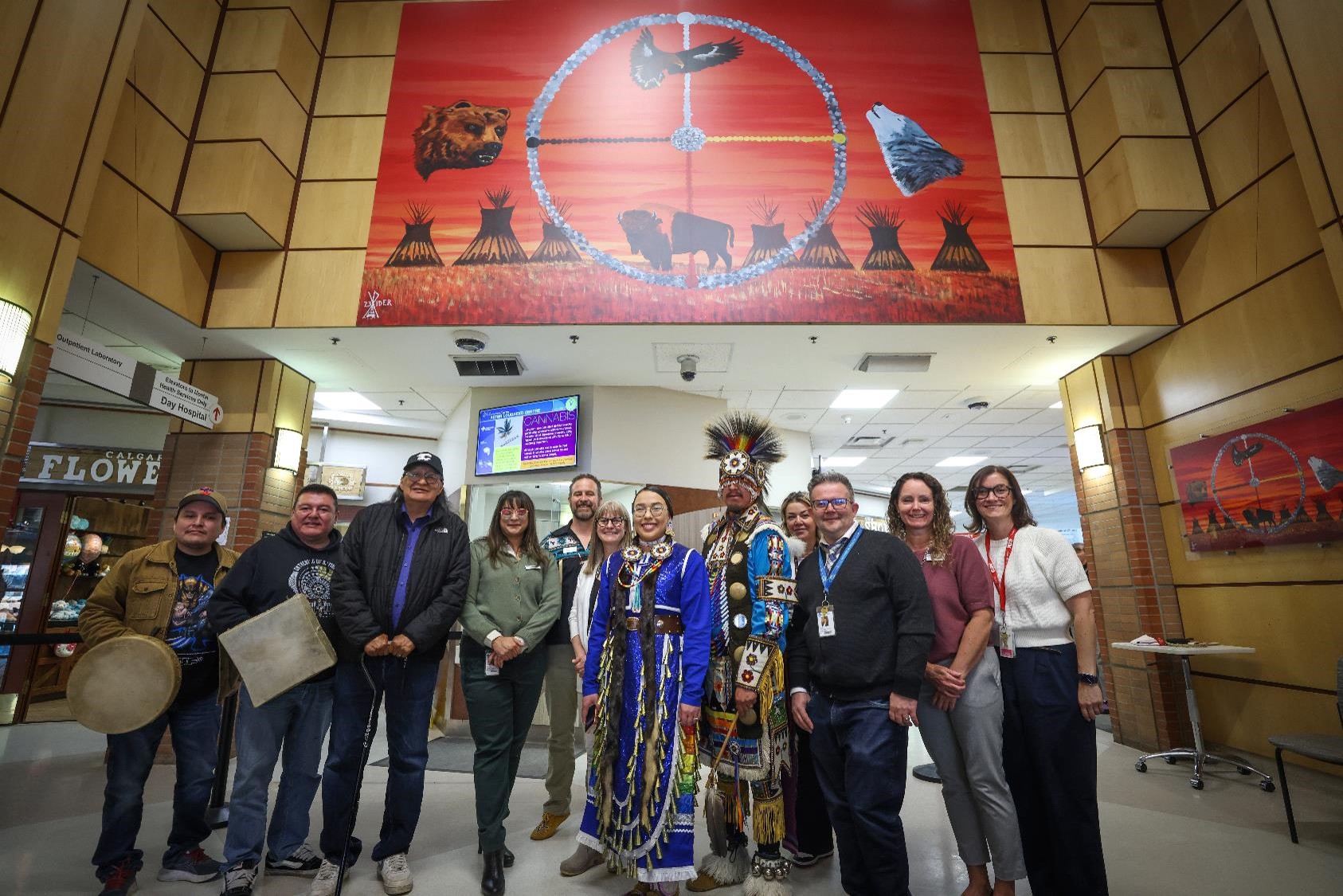
Attendees stand beneath The Power of the Medicine Wheel mural during its unveiling at the Peter Lougheed Centre. Artist Keevin Rider stands third from the left. Photo by Leah Hennel.New Indigenous art mural unveiled at Peter Lougheed Centre
Story by Melanie Veriotes | Photo by Leah HennelCALGARY — A new Indigenous art feature wall now welcomes patients, families, staff and visitors as they enter the Peter Lougheed Centre (PLC) through the west entrance.
The mural was unveiled recently during a traditional ceremony with prayers, dancing and drumming and attendees including Indigenous leaders, Elders, the mural’s artist, AlbertaContinue reading
Attendees stand beneath The Power of the Medicine Wheel mural during its unveiling at the Peter Lougheed Centre. Artist Keevin Rider stands third from the left. Photo by Leah Hennel.New Indigenous art mural unveiled at Peter Lougheed Centre
Story by Melanie Veriotes | Photo by Leah HennelCALGARY — A new Indigenous art feature wall now welcomes patients, families, staff and visitors as they enter the Peter Lougheed Centre (PLC) through the west entrance.
The mural was unveiled recently during a traditional ceremony with prayers, dancing and drumming and attendees including Indigenous leaders, Elders, the mural’s artist, Alberta Health Services (AHS) staff, physicians and site leadership.
The event marked the PLC’s ongoing work toward Truth and Reconciliation and reinforced its commitment to the creation of a welcoming environment grounded in respect, connection and culturally appropriate care.
Created by artist Keevin Rider of the Bearspaw First Nation, the mural — entitled The Power of the Medicine Wheel — is intentionally placed so all who enter from the west pass through the Medicine Wheel which symbolizes balance, reflection and care that honours the whole person.
The Medicine Wheel is a sacred teaching used by many Indigenous cultures. While teachings vary among Nations, it’s often understood to represent the connection between spiritual, emotional, physical and mental health. Together, this connection reminds us that wellness means caring for the whole person and the relationships that support them, not just treating the illness.
For Rider, contributing to the PLC space felt deeply personal. Having recently spent time in hospital himself, he reflected on the importance of compassion in healthcare.
“I’m honoured to be a part of this,” Rider said. “When you’ve been in hospital, you really understand the power of kindness, understanding and being connected to loved ones. The power is in the Medicine Wheel and what each section represents. When you live by these teachings, you feel peace within yourself.”
PLC Senior Operating Officer Nicholas Thain also spoke to the personal significance of the unveiling.
“Today was a powerful connection point for me. I made a commitment to the late Leo Pretty Young Man, Horn Society Leader (highest society in Blackfoot culture), to work to improve access, care and connection for Indigenous peoples. I believe this artwork, as you walk through the Medicine Wheel, does that for all.”
The unveiling also reflects a broader history of partnership and work that continues to evolve. Dr. Tyler White, former CEO of Siksika Health Services, reflected on how the installation connects to efforts that began several years ago.
He recalled being part of the 2021 ceremony in Strathmore, when the Siksika Nation flag became the first Indigenous flag to fly permanently at an Alberta Health Services hospital site, marking an important step in a longer journey of change.
Dr. White noted that, since then, progress has been made by building pathways, strengthening relationships, and working alongside many Nations and AHS team members.
Guided by Elders throughout this work, he said he was proud to be part of the unveiling and looks forward to continued cooperation to further improve access, care and connection for Indigenous peoples.
-
Elder teaching with Elder Dr. Elmer Ghostkeeper
Start the week in a good way with traditional teachings and prayers from Elders on Mondays.
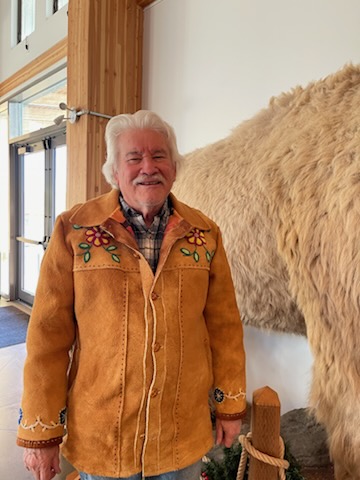
We are honoured to have Elder Dr. Elmer Ghostkeeper, a respected Métis Elder, scholar, author, entrepreneur, and community leader leading our first teaching this month. His life’s work has been dedicated to bridging Indigenous knowledge systems and Western academic traditions.
Elder teaching with Elder Dr. Elmer Ghostkeeper
Monday June 8
12:00 p.m. to 1:00 p.m.Start the week in a good way with traditional teachings and prayers from Elders on Mondays.
We are honoured to have Elder Dr. Elmer Ghostkeeper, a respected Métis Elder, scholar, author, entrepreneur, and community leader leading our first teaching this month. His life’s work has been dedicated to bridging Indigenous knowledge systems and Western academic traditions.
Elder teaching with Elder Dr. Elmer Ghostkeeper
Monday June 8
12:00 p.m. to 1:00 p.m. -
The story behind the image
Story by Janine Poersch
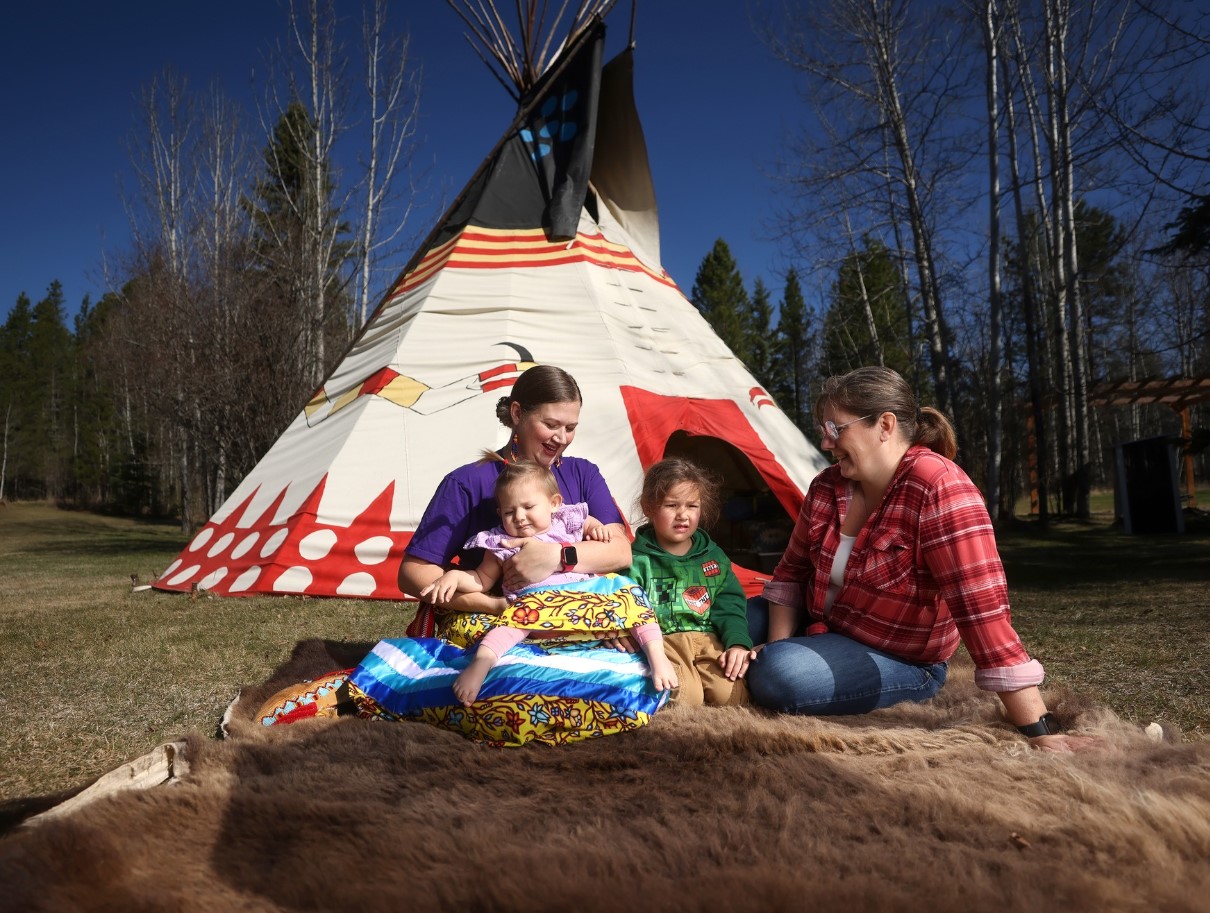
Karlee Fellner’s daughter, Pêtâstêkawisk, was born in a birthing pool, surrounded by smudging, drumming and songs. It was a deliberate return to land-based traditions, supported by registered midwife Nicole Matheson.“I knew that would be such a different beginning for the baby—to come out and hear the sounds of the land right away,” says Fellner, a citizen of the Métis Nation of Alberta. “The birds singing. The smells of the land. The smoke of the fire… what a better way to transition from your mom’s womb into this world.”
For Fellner, giving birth in a mîkiwahpContinue reading
Story by Janine Poersch
Karlee Fellner’s daughter, Pêtâstêkawisk, was born in a birthing pool, surrounded by smudging, drumming and songs. It was a deliberate return to land-based traditions, supported by registered midwife Nicole Matheson.“I knew that would be such a different beginning for the baby—to come out and hear the sounds of the land right away,” says Fellner, a citizen of the Métis Nation of Alberta. “The birds singing. The smells of the land. The smoke of the fire… what a better way to transition from your mom’s womb into this world.”
For Fellner, giving birth in a mîkiwahp (tipi) on the land was an important part of her birthing plan. Matheson explains that everyone has their own feelings about what makes a safe birthing environment.
“We make sure clients have the information they need to make informed choices about their birthplace, whether that’s at home, in a birth centre or in a hospital,” says Matheson, “and we support them in those choices.”
She and another midwife provide care across Rocky Mountain House and surrounding areas, including O’Chiese and Big Horn First Nations communities.
Matheson is one of Primary Care Alberta’s network of 180 midwives working autonomously across the province. This network includes an increasing number of Indigenous registered midwives. Many of whom develop close partnerships with Indigenous communities to provide culturally safe, people-centred care.
Fellner’s birthing journey lasted more than two weeks, but she says it unfolded just as she had hoped. As a psychologist specializing in intergenerational and complex trauma, she believes that healthy communities begin at birth.
“I want my children to have the best start they possibly can, and being born on the land is a part of that,” she explains. “Having the smudge, the drums and song helped so much with the pain and hard parts, along with Nicole’s reminders that the pain was temporary.”
June is National Indigenous Peoples Month. This year’s theme - Embracing Cultural Safety - invites us to listen, learn and reflect on how healthcare providers can help Indigenous patients and families feel safe, respected and heard. -
2026 National Indigenous Peoples Month Design
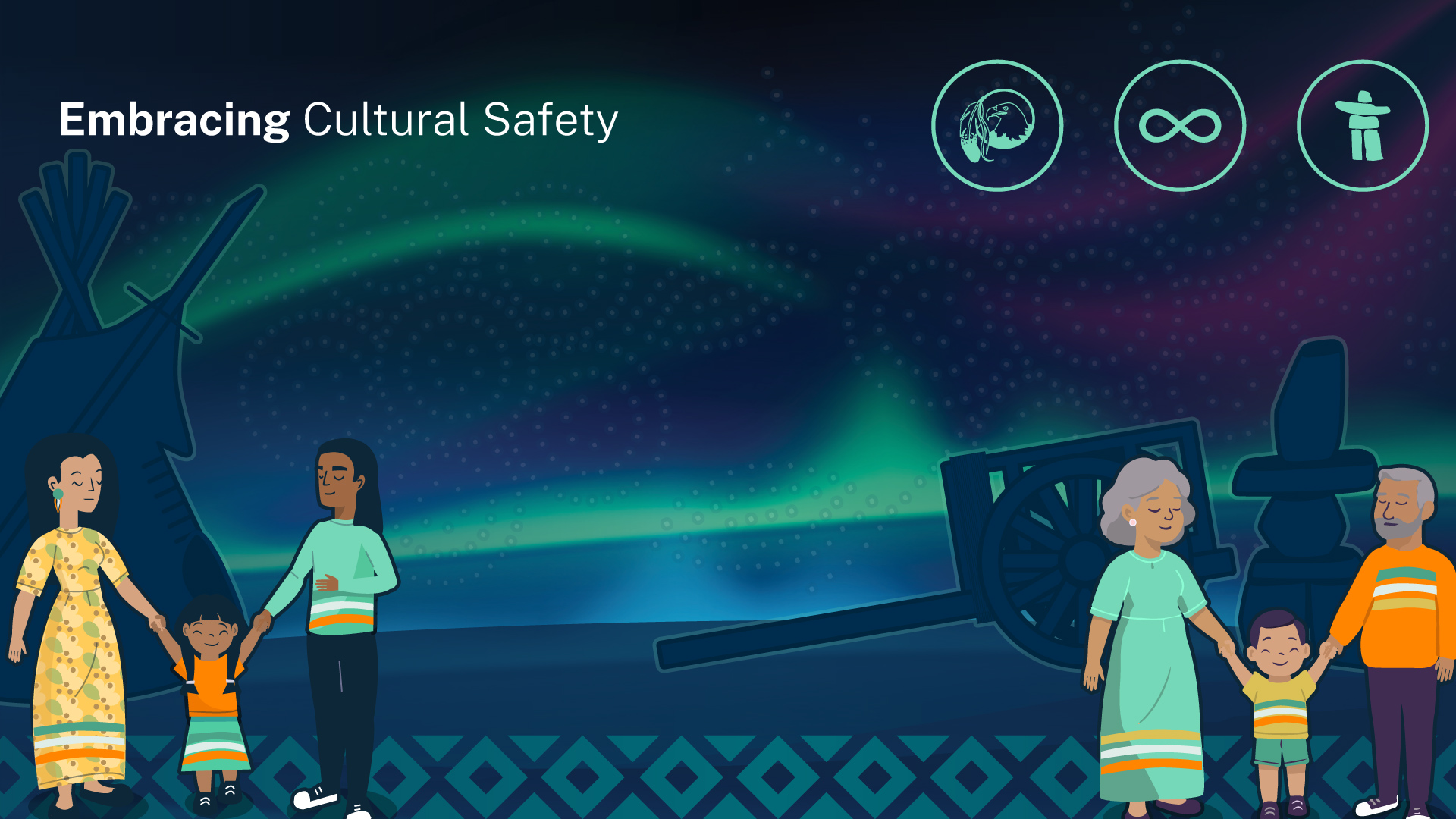
This year’s design, created by Métis artist Jacqueline Barr, was inspired by the 2026 theme: Embracing Cultural Safety. Jacqueline kindly shared with us the thoughts that went into her beautiful artwork this year:
The Vision
Right from the start, I envisioned a calm scene representing the First Nations, Métis, and Inuit peoples of Alberta. When we feel comforted our bodies are at peace—and it is vital for people of all cultures and walks of life to feel safe and supported during their healthcare journey.Symbolic Elements
To evoke this sense of calmness, I turned to the deep bluesContinue reading
This year’s design, created by Métis artist Jacqueline Barr, was inspired by the 2026 theme: Embracing Cultural Safety. Jacqueline kindly shared with us the thoughts that went into her beautiful artwork this year:
The Vision
Right from the start, I envisioned a calm scene representing the First Nations, Métis, and Inuit peoples of Alberta. When we feel comforted our bodies are at peace—and it is vital for people of all cultures and walks of life to feel safe and supported during their healthcare journey.Symbolic Elements
To evoke this sense of calmness, I turned to the deep blues of a night sky, illuminated by stars and the aurora borealis. With guidance from Elder Colleen Jobin, Senior Advisor for North Indigenous Health and fellow committee member, we incorporated the aurora to honor our spiritual connection to our ancestors. Tobacco has been offered to acknowledge this spiritual connection.As Colleen shares:
“Here is a good explanation of the aurora teachings for First Nations and one that I was taught as well.”Three other symbolic elements added to the design include:
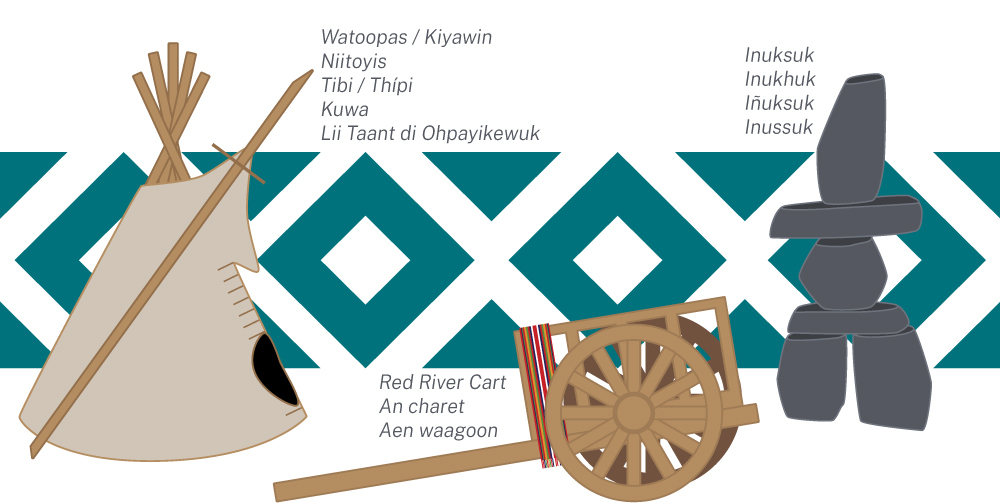
- the tipi/teepee (Watoopas or kiyawin (Cree), Niitoyis (Blackfoot), Tibi / Thípi (Stoney Nakoda), Kuwa (Tsuut’ina), and Lii Taant di Ohpayikewuk (Métis)) to represent First Nations
- the Red River cart (An charet or aen waagoon (Michif)) to represent Métis
- the inuksuk (Inuksuk (Inuktitut), Inukhuk (Inuinnaqtun), Iñuksuk (Iñupiaq), Inussuk (Greenlandic)) to represent Inuit

Connection and Safety
We also integrated the concept of family into the design, a suggestion from committee member Carolyn Paradis. This addition reinforces the visual sense of connection, belonging, and safety that lies at the heart of this year's theme.
![]()