
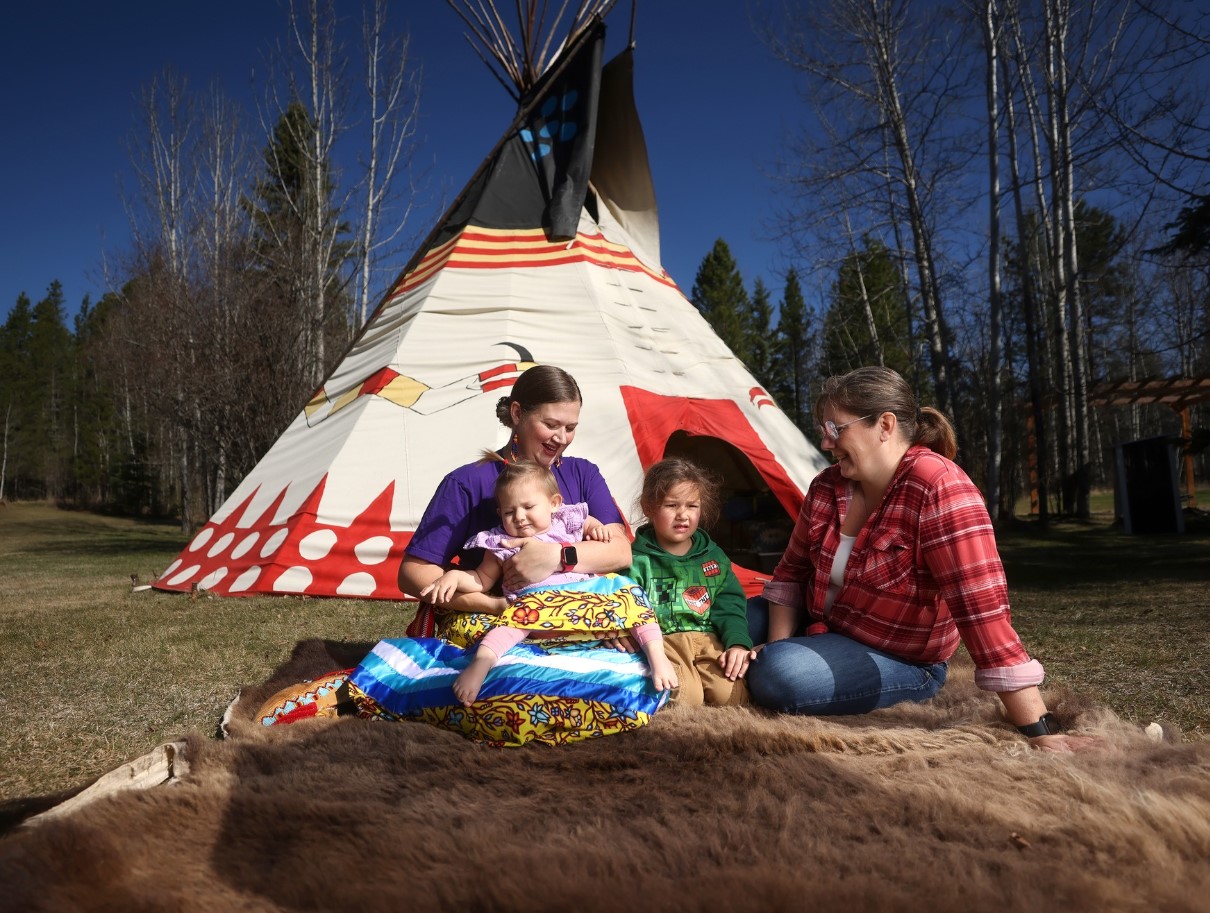
The story behind the image
 Story by Janine Poersch
Karlee Fellner’s daughter, Pêtâstêkawisk, was born in a birthing pool, surrounded by smudging, drumming and songs. It was a deliberate return to land-based traditions, supported by registered midwife Nicole Matheson.
“I knew that would be such a different beginning for the baby—to come out and hear the sounds of the land right away,” says Fellner, a citizen of the Métis Nation of Alberta. “The birds singing. The smells of the land. The smoke of the fire… what a better way to transition from your mom’s womb into this world.”
For Fellner, giving birth in a mîkiwahp (tipi) on the land was an important part of her birthing plan. Matheson explains that everyone has their own feelings about what makes a safe birthing environment.
“We make sure clients have the information they need to make informed choices about their birthplace, whether that’s at home, in a birth centre or in a hospital,” says Matheson, “and we support them in those choices.”
She and another midwife provide care across Rocky Mountain House and surrounding areas, including O’Chiese and Big Horn First Nations communities.
Matheson is one of Primary Care Alberta’s network of 180 midwives working autonomously across the province. This network includes an increasing number of Indigenous registered midwives. Many of whom develop close partnerships with Indigenous communities to provide culturally safe, people-centred care.
Fellner’s birthing journey lasted more than two weeks, but she says it unfolded just as she had hoped. As a psychologist specializing in intergenerational and complex trauma, she believes that healthy communities begin at birth.
“I want my children to have the best start they possibly can, and being born on the land is a part of that,” she explains. “Having the smudge, the drums and song helped so much with the pain and hard parts, along with Nicole’s reminders that the pain was temporary.”
June is National Indigenous Peoples Month. This year’s theme - Embracing Cultural Safety - invites us to listen, learn and reflect on how healthcare providers can help Indigenous patients and families feel safe, respected and heard.

Thank you for your contribution!
Help us reach out to more people in the community
Share this with family and friends